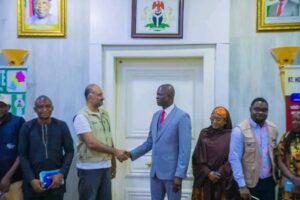

Ebonyi State Governor, Rt. Hon. Bldr. Francis Ogbonna Nwifuru, has strengthened his administration’s agricultural development programme with a ₦1 billion investment in 200 young Ebonyians trained to participate actively in the state’s agricultural value chain.
The initiative, according to the Governor’s Special Assistant on New Media, Leo Ekene Oketa, is part of the administration’s deliberate investment in human capital development and its broader agricultural revolution.

As part of the programme, the 200 beneficiaries were taken to CSS Farms in Gora, Nasarawa State, where they received practical training in food production, processing and other aspects of the agricultural value chain.
The training was designed to equip the beneficiaries with the technical knowledge and practical skills required to operate successfully in modern agriculture and agribusiness.
However, Governor Nwifuru’s intervention went beyond training. Following the completion of the programme, each of the 200 beneficiaries received ₦5 million in start-up support, bringing the total financial commitment to ₦1 billion.

The intervention is expected to enable the beneficiaries to translate the knowledge acquired during their training into productive agricultural ventures, while creating employment and contributing to food production and economic growth in Ebonyi State.
The programme reflects the administration’s approach of combining skills acquisition, financial support and access to opportunities as a means of ensuring that youth empowerment produces sustainable economic outcomes.
Through the initiative, the state government seeks to nurture a new generation of young farmers and agripreneurs capable of producing food, processing agricultural products, creating jobs and generating sustainable income.
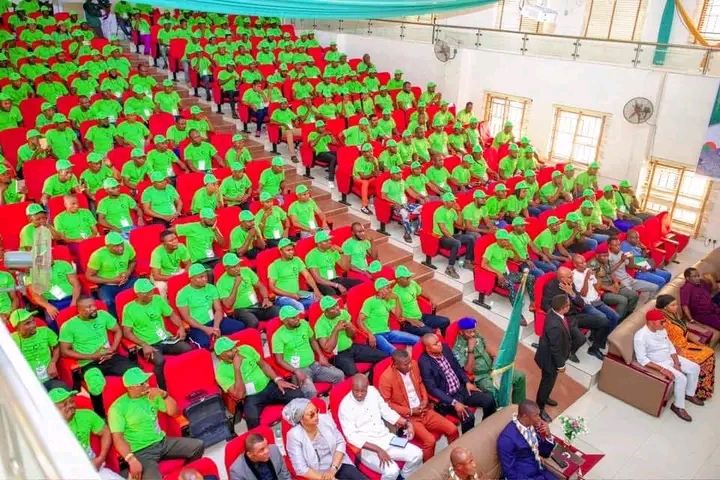
The development also underscores Governor Nwifuru’s broader focus on human capital development as a key component of his administration’s People’s Charter of Needs agenda.
According to Oketa, the investment demonstrates that the Governor’s agricultural revolution is not limited to the provision of farm roads, tractors and agricultural inputs, but also prioritises the development of the people who will drive the sector.
“When government deliberately combines skills, capital and opportunity, empowerment stops being a slogan and becomes a pathway to prosperity,” he said.
He added that the initiative represents a practical demonstration of the administration’s commitment to human capital development, agricultural advancement and the creation of opportunities for the younger generation.