Throughout history, the relationship between the Church and the State has remained delicately significant for development. An initial glance seems to present two divergent institutions – one governing the soul, the other the body; one concerned with the eternal, the other with the temporal. However, beneath this apparent dichotomy, lies a profound and often underestimated symbiosis – one that operates beyond the optics of political rhetoric, public debate, and even theological dogma. This delicate, but often undervalued relationship, has not only shaped the trajectory of development in Ebonyi State and beyond, but continues to mold the psychological, moral, and sociopolitical fabric of our societies.
Historical Roots
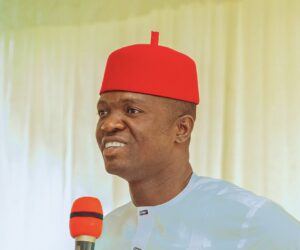
In Ebonyi State, Governor Francis Ogbonna Nwifuru has promised the Church, that the significant relationship between them will never be taken for granted. His statement and disposition call to mind the historic points of note when States worked closely with the Church to great societal effect. From the crowning of Charlemagne by Pope Leo III in 800 AD to the role of the Russian Orthodox Church in Tsarist Russia, history is rife with moments where the Church assisted the growth of political authorities and the State, in turn, protected religious institutions. These acts were more than ceremonial. They symbolized a mutual acknowledgment: the Church granted moral legitimacy, while the State ensured institutional survival.
In the medieval period, particularly in Europe, the Church was often the only literate and bureaucratically competent institution. Monarchs leaned on clerical expertise to govern their realms. In exchange, rulers enforced religious orthodoxy and suppressed heresy, thus reinforcing the Church’s ideological supremacy. Even during moments of supposed separation, like the Enlightenment or the founding of secular republics, the influence of religious thought persisted. Political ideologies such as democracy, human rights, and even socialism borrowed heavily from Christian ethical frameworks. These traditions have continued till modern times, with improved understanding in alignment with the needs of the people.
Specifically, Ebonyi State has a long history of formal cooperation between government and Christian missions. In 2021, the Umahi administration transferred public schools including vocational and technical colleges to the Catholic Church, citing a need for improved moral education delivered by disciplined missionary institutions. Later in 2023, Governor Nwifuru recommitted to returning all former mission schools to their Church founders, explicitly acknowledging the Church’s role in delivering quality education.
A Symbiosis of Influence, Not Control
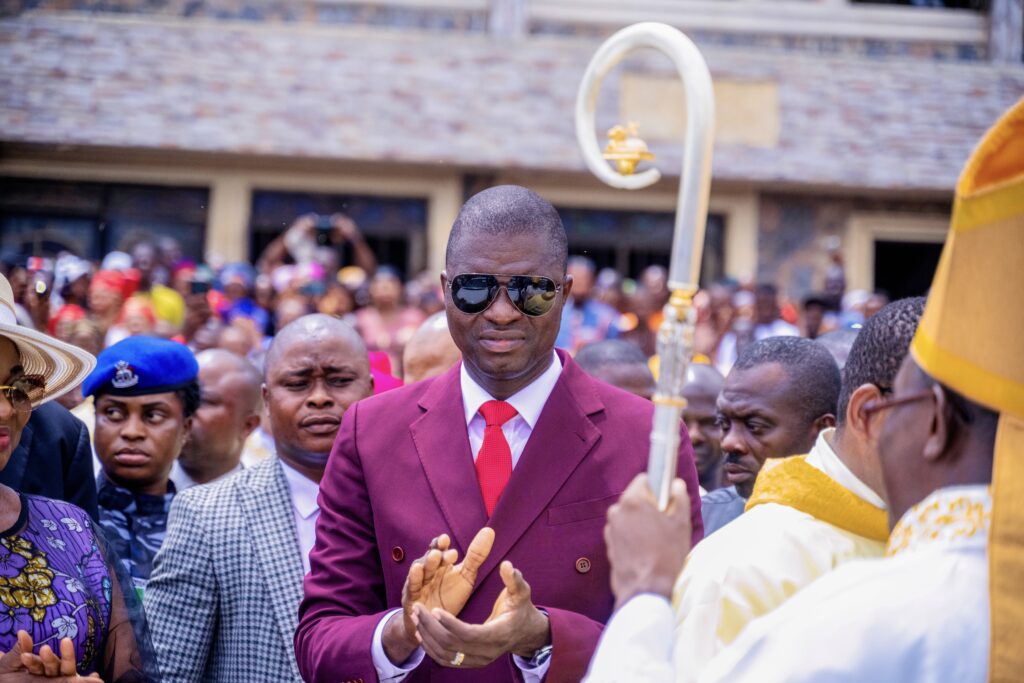
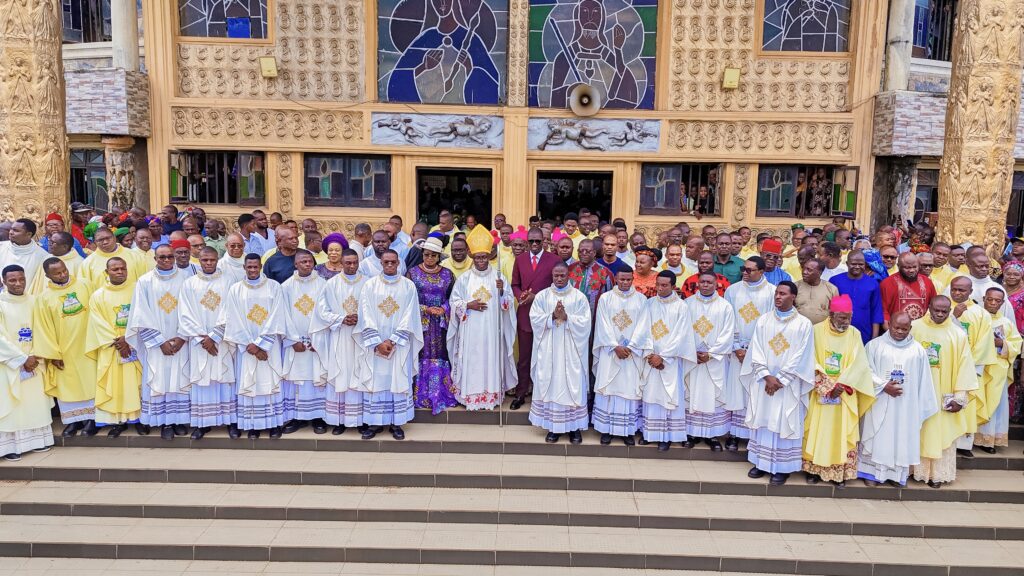
In his remarks just before the conclusion of the Holy Mass of the ordination of twelve (12) Catholic Priests at St. Teresa’s Cathedral, Abakaliki, on July 5 2025, Governor Francis Nwifuru upheld the Church as a Divine Instrument for Peace in Ebonyi State. He lauded the moral, discipline and spiritual consistency of the Church’s disposition to issues, calling on them to help in redirecting the youths, especially in the rural areas. The Government recognizes the indispensable role of the Church in keeping Ebonyi State peaceful – a unique relationship seldom found elsewhere across Nigeria. In no small measure, this has made Ebonyi State, the safest State in Nigeria. As such, the modern relationship between Church and State is not one of control, but mutual influence. The Church no longer commands armies, but it can mobilize masses. The State may not dictate doctrine, but it often defines the boundaries within which religion operates. This interdependence is not problematic. In fact, it reflects the reality that neither entity exists in a vacuum. Human beings are moral, political, and spiritual creatures. Institutions that seek to govern them, whether civil or sacred, must reckon with this complexity.
Such an institution, capable of ensuring that peace, discipline and moral standards are maintained in the society, deserves all the support it can get. Their values are more of the intangibles but when neglected or abused, the repercussions could be unimaginable. This is where the symbiosis goes “beyond the prism of human optics.” It is not about visible alliances or overt power plays. It is about shared narratives, mutual legitimization, and the deep-seated human need for meaning, order, and belonging. In Ebonyi State and beyond, States need the Church’s moral compass just as much as the Church needs the State’s infrastructure to remain socially relevant.
And so, to offer car gifts to priests who are saddled with the responsibility of moving into the depths of the villages and souls of the people is APT. It is a proper empowerment for an institution meant to entrench peace and the overall growth of the people. It is no different from the human empowerment that the Government does now and again. The empowerment for the Church ensures that there is peace and that youths are trained morally and in proper discipline. If not, we may neither have a peaceful society where the empowerment given to the masses can be invested, nor responsible youths to invest same.
In Conclusion…
The relationship between the Church and the State is not a zero-sum game. It is a living, evolving symbiosis that transcends simplistic binaries. To see it clearly requires more than political analysis or theological debate. It requires an understanding of the human condition itself. In our quest for justice, order, and meaning, we have built institutions to reflect both our civic duties and our spiritual aspirations. Their ongoing interaction is not a flaw of human society, it is its most enduring feature.
Thank you, Your Excellency, Governor Rt. Hon. Francis OgbonnaNwifuru, for your wise disposition, as always. Congratulations to the newly ordained 12 Priests of the Catholic Diocese of Abakaliki. To God be the Glory.