
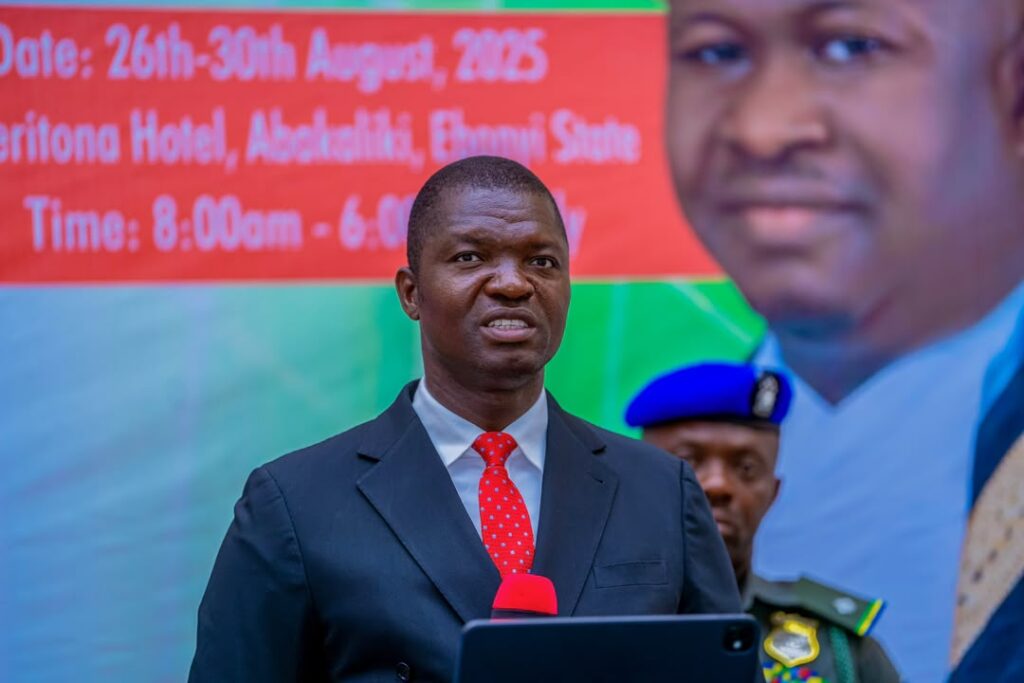
The Ebonyi State Government has intensified efforts to make justice more accessible to vulnerable citizens, with the administration of Governor Francis Ogbonna Nwifuru placing greater emphasis on legal support for people who may be unable to afford legal representation.
The initiative, anchored on the administration’s People’s Charter of Needs, is aimed at ensuring that financial circumstances do not prevent indigent citizens, widows, children, persons living with disabilities and other vulnerable groups from seeking justice and protecting their rights.
The state’s Attorney-General and Commissioner for Justice, alongside his team, has continued to drive reforms designed to expand access to legal assistance and strengthen institutions that provide support to citizens who require legal intervention.
According to a statement by the Special Assistant to the Governor on New Media, Leo Ekene Oketa, the institutional development of the justice sector under the present administration includes the establishment of the Ebonyi State Multi-Door Courthouse in 2023, the Citizens’ Mediation Centre in 2024, and the Office of the Public Defender in 2026.
Oketa described the institutions as important avenues through which vulnerable citizens can seek assistance and resolve disputes without being constrained by their financial circumstances.
He noted that a widow who cannot afford private legal representation should still be able to have her rights defended, while children and persons living with disabilities should have access to mechanisms capable of protecting their interests and securing redress where necessary.
He further stressed that poverty should not become a barrier to justice, arguing that effective governance should be measured not only by physical infrastructure and projects but also by the extent to which citizens are protected, empowered and given a voice.
According to him, the People’s Charter of Needs is gradually moving beyond a policy framework to find practical expression in the lives of Ebonyians through initiatives designed to improve access to essential services and opportunities.“Justice must not be a privilege for the wealthy. It must remain a right accessible to all,” Oketa said.
The development is being presented by the state government as part of its broader effort to build what it describes as a New Ebonyi, where access to justice and protection of citizens’ rights are not determined by economic status.