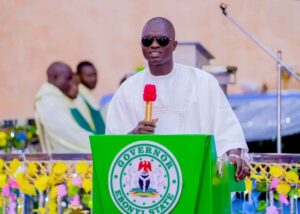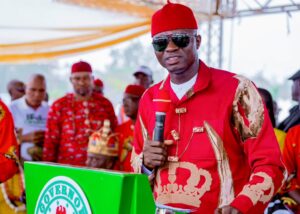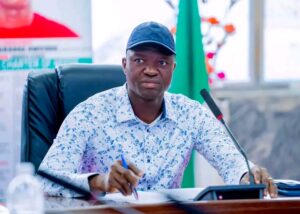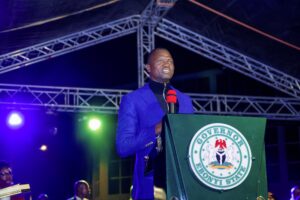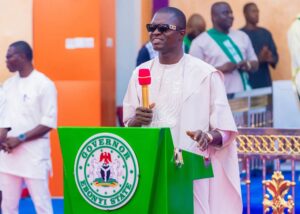
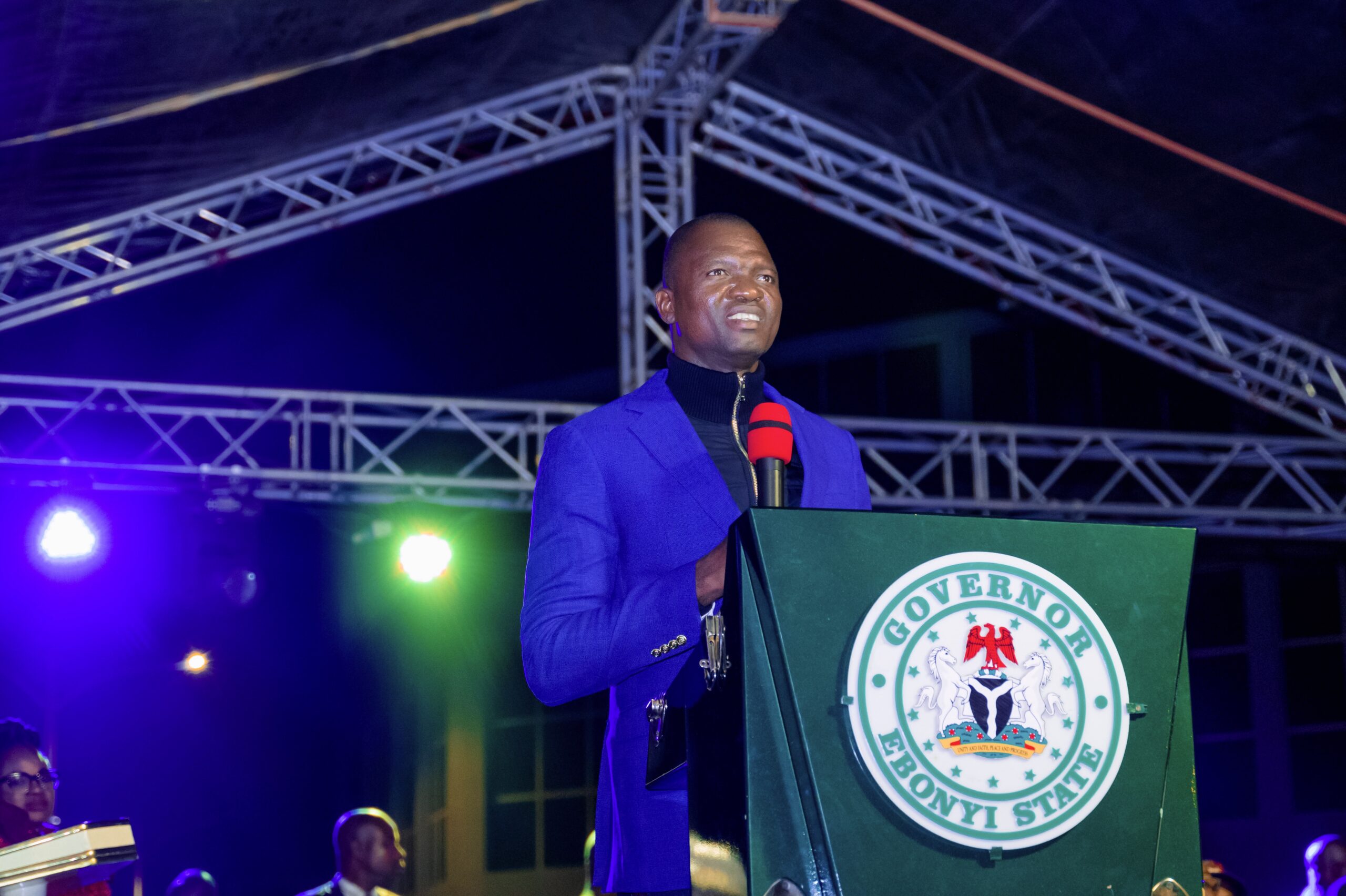
Governor Francis Ogbonna Nwifuru
The Ebonyi State Government has defended the administration of Governor Francis Ogbonna Nwifuru against criticisms contained in an open letter to the governor, arguing that the state’s development should be assessed from a broader perspective than isolated observations of roads and infrastructure.
Mr. Leo Ekene Oketa, Special Assistant to the Governor on New Media, made the position known in a response addressed to the author of the open letter, whom he described as his brother, Amobi, also known as KAA.
Oketa said while the author had the right to criticise government and raise concerns about the direction of the state, such criticism should be accompanied by a broader perspective of developments across Ebonyi.
He argued that the state was “much bigger than one journey through Abakaliki,” stressing that assessments based on individual experiences should not be used to define the entire state.
According to him, the Nwifuru administration inherited challenges, as well as projects and assets from previous administrations, and has continued to maintain, expand, complete and build infrastructure as part of its policy of continuity and consolidation.
“Every administration has its own chapter in the history of this State,” Oketa said, adding that government should improve and maintain existing assets rather than abandon them because they were initiated by previous administrations.
He listed roads, bridges, education, healthcare, agriculture, industrialisation, technology, housing and human capital development among the areas where the administration has continued to invest.
Oketa specifically cited the development of the ICT University at Oferekpe and the University of Aeronautic Engineering and Aerospace Engineering, as well as scholarship and educational opportunities for Ebonyians within and outside Nigeria.
He also pointed to the recruitment of health workers, equipping of hospitals, provision of ambulances, renovation of medical facilities and expansion of access to health insurance as part of the administration’s interventions in the health sector.
On agriculture, the governor’s aide said the administration had continued to invest in fertilizer production and distribution, mechanisation, rice and cassava processing and other initiatives aimed at increasing the economic value derived from agricultural production in the state.
He also highlighted ongoing industrial projects, including efforts to revive the State’s Pipe Production Company and Fertilizer Chemical Company, the 10-storey building at Presco Junction and the proposed new cement factory.
Oketa questioned whether the author of the open letter had visited some of the projects before arriving at his assessment of the state.
He maintained that the existence of challenges did not mean that government had completed its work, but argued that the ongoing investments were significant and should form part of any assessment of the state.
Responding to the description of Ebonyi as a “wasteland,” Oketa said such a characterisation failed to reflect the scale of public investment taking place across different sectors.
He also challenged the claim that businesses were leaving the state “in droves,” asking the author to identify the businesses and projects allegedly abandoned, as well as specific government actions or policies that contributed to such decisions.
“You said you personally abandoned projects worth hundreds of millions of naira. That should concern every Ebonyian. So please, tell us which projects. Tell us the businesses. Tell us the investments. Tell us what government did or failed to do,” he said.
Oketa further urged the author to bring forward ideas capable of attracting investments, creating jobs, developing the creative economy and improving Ebonyi’s visibility internationally.
He said investors interested in coming to the state should be encouraged to engage with the government on the requirements for their investments, while noting that Ebonyi has a legal framework intended to protect investors.
“If you believe there are better ways of doing things, bring the ideas. That is how we can grow,” he said.
The governor’s aide stressed that acknowledging government’s achievements should not amount to pretending that everything was perfect, just as criticism should not portray the entire state as hopeless.
He called for what he described as the “complete story” of Ebonyi — one that recognises both the challenges and the ongoing development efforts.
“Let us therefore tell the complete story — not the perfect story, not the hopeless story, but the honest story of a State that is still building, still evolving and still determined to move forward, comprehensively,” Oketa said.
He concluded by urging the author to visit Ebonyi more frequently, saying this would provide a broader perspective of developments across the state.