The administration of Ebonyi State Governor, Rt. Hon. Francis Ogbonna Nwifuru, has intensified efforts to reposition agriculture as a major driver of food security, economic growth and improved livelihoods in the state.
Agriculture has remained central to the socio-economic life of Ebonyi, given its vast arable land, favourable climatic conditions and long-standing farming culture. Beyond being an economic activity, farming is a major source of livelihood for thousands of residents and a defining feature of the state’s identity.
Recognising its importance, the Nwifuru administration placed agriculture as the third priority of its People’s Charter of Needs, following education and health.
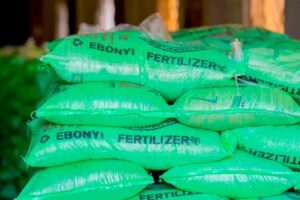
However, the administration’s agricultural agenda has gone beyond policy pronouncements, with practical interventions aimed at increasing production and supporting farmers.
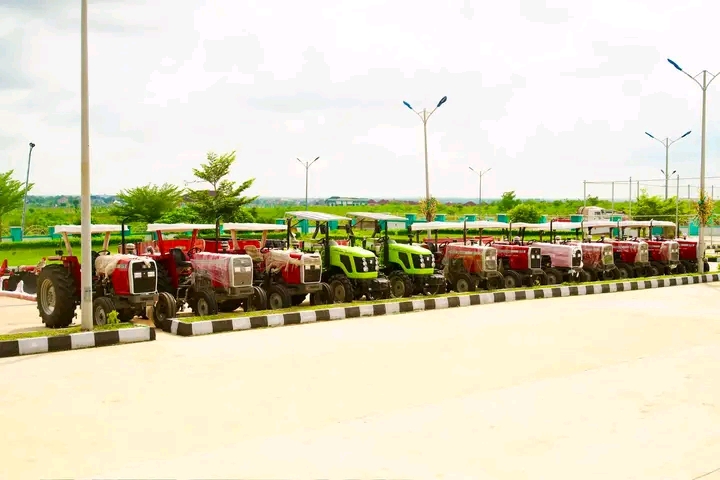
A major component of this strategy was the procurement of 15 brand-new tractors for the State Ministry of Agriculture, providing the machinery required to expand cultivation and promote mechanised farming.
The intervention is designed to reduce dependence on manual labour, increase the number of hectares cultivated and enable the government to participate more effectively in large-scale agricultural production.
The impact is already being reflected in the state’s rice production.
According to the Commissioner for Agriculture, Princess Mrs. Nkechinyere Iyioku, about 70 per cent of the rice distributed across the state during the festive season over the past three years was produced at the state-owned rice farm in Ezillo.
The development, she noted, reflects the outcome of the state government’s deliberate investment in practical agriculture, with mechanisation playing a significant role in facilitating large-scale cultivation.
The significance of the 15 tractors therefore goes beyond the acquisition of agricultural machinery. Their deployment translates into increased cultivation, improved productivity, greater food production and enhanced capacity to support food security across the state.
For an agrarian state like Ebonyi, agricultural mechanisation also has the potential to make farming more attractive and productive while reducing some of the physical and financial burdens associated with traditional farming methods.
The development at Ezillo demonstrates how government investment in agriculture can translate into tangible results, from the cultivation of farmland to the production and distribution of food to residents.
The Nwifuru administration’s approach represents a shift from viewing agriculture principally as a government policy area to treating it as a practical economic enterprise requiring investment, machinery, production and measurable outcomes.
With the tractors deployed to the fields and the harvest reaching households, the administration is seeking to demonstrate that agriculture can play an even greater role in strengthening Ebonyi’s economy and achieving food security.
From the fields of Ezillo to the tables of Ebonyian families, the message is increasingly clear: Ebonyi is not merely talking about agriculture; it is putting agriculture to work.