The administration of Governor Francis Ogbonna Nwifuru of Ebonyi State has continued to strengthen the state’s agricultural sector through its partnership with the International Fund for Agricultural Development (IFAD), with a focus on improving productivity, empowering farmers and developing sustainable agricultural value chains.
The partnership, implemented through the Value Chain Development Programme (VCDP), is providing farmers with access to mechanisation, irrigation, improved inputs, processing facilities, rural infrastructure and technical training aimed at transforming agriculture into a more productive and profitable enterprise.
A major factor behind the expansion of the programme in the state is the Ebonyi State Government’s commitment to meeting its counterpart funding obligations, which has helped create the necessary environment for IFAD interventions to deepen and reach more farming communities

.When IFAD commenced its intervention in Ebonyi, the programme covered only three Local Government Areas. Its operations have since expanded to eight LGAs — Izzi, Ohaukwu, Ohaozara, Ivo, Edda, Ikwo, Ishielu and Ezza North.
The state government is now seeking to extend the programme to all 13 Local Government Areas of Ebonyi, underscoring the administration’s confidence in the partnership and its commitment to ensuring that more farmers benefit from agricultural development initiatives.

Mechanisation and Rural Infrastructure
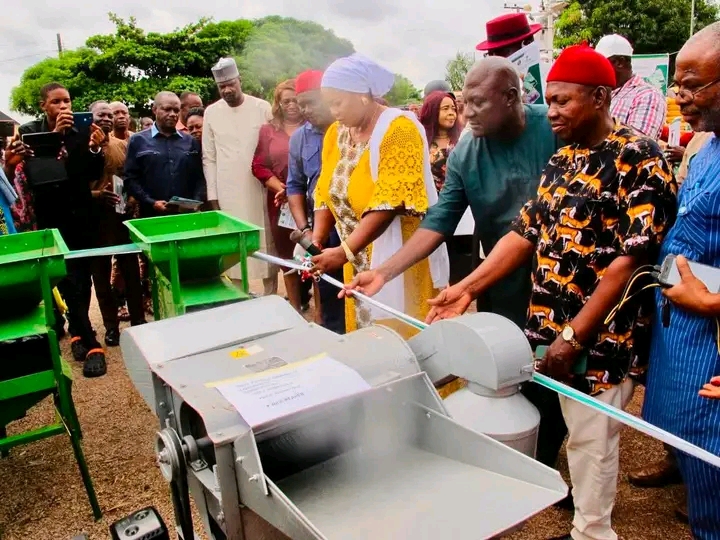
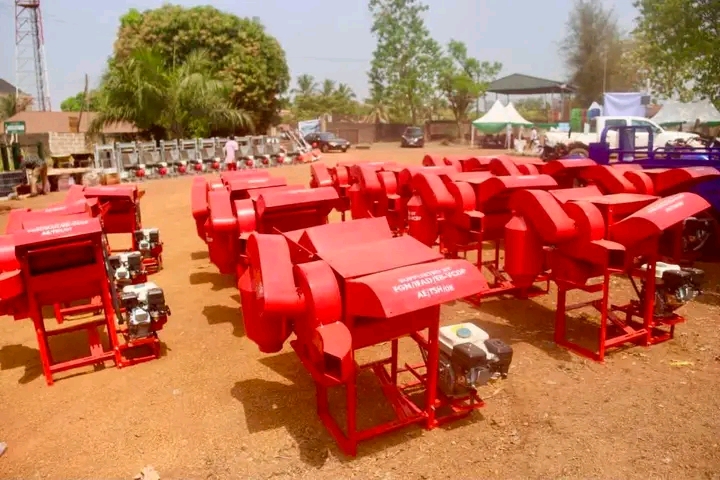
Under the programme, farmers have received agricultural equipment, including power tillers, threshers, tricycles, planters and sprayers. The provision of such machinery is expected to reduce dependence on manual labour, improve efficiency and increase agricultural productivity.Beyond farm machinery, attention has also been given to rural infrastructure and access to farmlands.
Water infrastructure has equally received significant attention. Seventy-seven solar-powered boreholes have been constructed across participating communities, while irrigation facilities at Amaegu Enyim and Ndinwoloshi in Izzi Local Government Area have been completed to support dry-season farming.
The irrigation projects are expected to enable farmers to cultivate beyond the traditional rainy season, potentially increasing production, household incomes and the overall economic value of agriculture.
Strengthening Processing and Value Addition
The programme has also placed significant emphasis on value addition, with 24 rice processing centres and 20 cassava processing centres constructed across the eight participating LGAs.
The facilities provide farmers with opportunities to move beyond the production of raw commodities into processing, thereby increasing the value of their produce while creating employment and economic opportunities within rural communities.
About 350 hectares of farmland have also been prepared across Afikpo, Ezza North and other participating areas to improve farmers’ access to developed agricultural land.
Meanwhile, extension workers have been provided with motorcycles to improve their mobility and ability to reach farmers in rural communities.

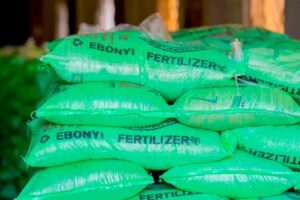
Farmers have also benefited from inputs such as improved seedlings and fertilisers, as well as training in production, processing and marketing.
According to the Ministry of Agriculture, more than 8,000 farmers have received training in rice and cassava value-chain development.
Some beneficiaries have also been exposed to agricultural practices in countries such as China and India, giving them access to modern farming techniques and knowledge that can be adapted to Ebonyi’s agricultural environment.
Developing Local Seed Production
One of the strategic components of the programme is the training of farmers in rice seed production, including foundational seed development.
The initiative is designed to improve access to quality seeds within the state and reduce farmers’ dependence on external sources, while creating additional opportunities for trained farmers to supply planting materials to other farmers.
The development of local capacity in seed production is expected to strengthen the sustainability of Ebonyi’s agricultural value chain and improve productivity over time.

Agriculture as a Pillar of the People’s Charter
For Governor Nwifuru, the development of agriculture is a key component of his administration’s broader development agenda.
Agriculture occupies the third position in the administration’s People’s Charter of Needs, following Education and Health, reflecting the government’s recognition of agriculture as a major driver of food security, rural development, employment and economic empowerment.
The administration’s approach goes beyond the distribution of agricultural inputs. It seeks to establish an integrated system covering land preparation, planting, mechanisation, irrigation, extension services, harvesting, processing and marketing.
The IFAD partnership therefore represents more than a collaboration between the Ebonyi State Government and an international development institution. It demonstrates how government commitment, counterpart funding and strategic partnerships can be combined to address longstanding challenges in the agricultural sector.
From the farm to the processing centre and ultimately to the market, Ebonyi is gradually building a value chain that enables farmers to participate more fully in the economic value generated from their produce.
For the Nwifuru administration, the objective is clear: to make agriculture more productive, profitable and sustainable while improving the livelihoods of farmers and strengthening the rural economy of Ebonyi State.